
Industrial reliability and municipal controls
Surge Protection: Why Industrial and Municipal Facilities Cannot Afford to Ignore It
Modern plants, pump stations, lift stations, well houses, and utility systems depend on electronics that are productive, diagnostic-rich, and vulnerable to short electrical disturbances. A transient event that lasts only a fraction of a second can damage a PLC, corrupt communications, trip a drive, or leave a field device weakened enough to fail later.
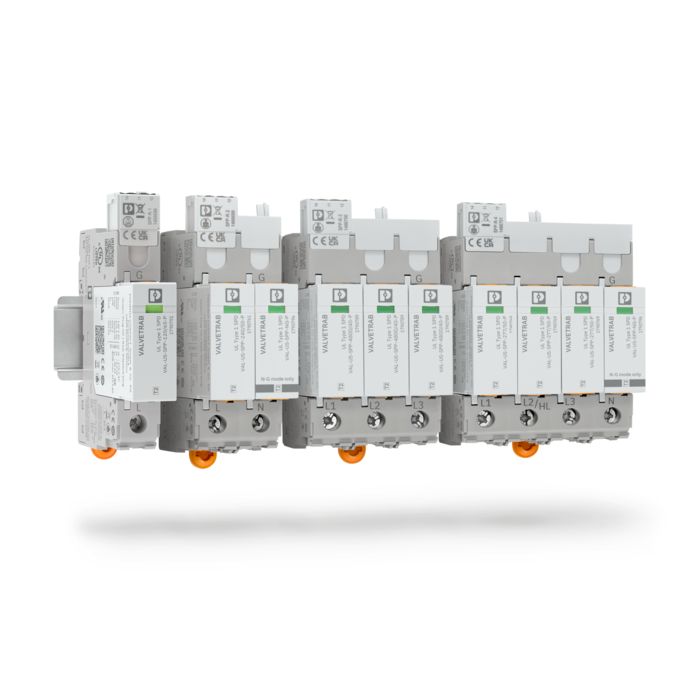
Illustration: how a surge protector works
When voltage rises suddenly, the surge protective device provides a preferred path for transient energy. It clamps the overvoltage and diverts surge current toward the grounding and bonding system, helping keep the remaining voltage at the protected equipment within a safer range for the application.
Normal operation
The SPD remains inactive while system voltage is within its intended operating range.
During the transient
The SPD conducts surge current and limits the voltage passed downstream. The exact protection depends on device selection and installation.
After the event
Status indicators, alarm contacts, or replaceable modules should be checked so the site is not left unknowingly unprotected.
What a surge is
An electrical surge, or transient overvoltage, is a brief voltage increase above the normal operating level. A surge protective device limits that transient energy by diverting or restricting surge current before it reaches vulnerable electronics.
Where it comes from
Lightning is only one source. Utility switching, motor starts and stops, contactors, solenoids, VFDs, capacitor banks, generator transfers, faults, and long outdoor conductors can all place surge energy into a facility.
Why it matters
Industrial and municipal systems combine sensitive controls, inductive loads, long cable runs, outdoor equipment, and remote structures. That mix gives transient voltage many possible entry paths.
Protecting only the main feed is not enough
A surge can enter through any connected conductor. Main power protection may reduce one exposure, but it does not automatically protect a level transmitter, Ethernet cable, telephone circuit, radio coax, buried instrumentation line, or remote I/O connection.
Municipal sites
- Lift stations and well houses
- Pump control panels and VFDs
- Flow, pressure, and level transmitters
- Cellular, licensed radio, and antenna systems
Industrial sites
- PLC and HMI cabinets
- Machine panels and MCCs
- Ethernet and serial communication networks
- Remote instruments and interbuilding wiring
Surge damage is not always immediate
Some events create obvious failures: a power supply stops, a PLC fails, or a drive refuses to restart. Other events weaken components and create problems that are harder to connect to the original disturbance.
Control symptoms
Intermittent PLC faults, unexpected HMI or computer reboots, failed I/O channels, and repeated power-supply failures can all follow transient exposure.
Signal symptoms
Drifting analog readings, unstable instrument signals, damaged Ethernet ports, radio failures, and unexplained communication losses can consume troubleshooting time long after the event.
Process risk
For water, wastewater, utility, and production systems, the cost is not limited to replacement hardware. Downtime, emergency service, data loss, regulatory impact, or process interruption may be the larger concern.
A UPS is not a complete surge-protection system
A UPS is useful for ride-through power and controlled shutdown. It should not be treated as a substitute for properly selected surge protective devices, grounding, bonding, circuit protection, and electrical-system design.
A layered approach is normally required
1. Service and distribution
Protection near the incoming service or primary distribution equipment helps reduce larger transient events entering from the utility or facility distribution system.
2. Branch and control panels
Additional devices at distribution panels, MCCs, pump panels, machine panels, and automation cabinets place protection closer to PLCs, drives, HMIs, power supplies, and network equipment.
3. DC power and signals
Low-voltage circuits may need separate protection for 24 VDC power, analog loops, digital I/O, RTDs, thermocouples, Ethernet, serial communication, telephone lines, and radio coax.
4. Remote equipment
Long outdoor runs and cables between structures often deserve attention at both ends so field devices and panels are not left exposed from the remote side.
Panel and MCC placement: where surge protection is commonly applied
The most useful illustration for a plant or municipal site is not a generic building. It is the electrical path: incoming service protection to reduce larger utility-side events, MCC or distribution protection close to motor-control equipment, and branch or control-panel protection near PLCs, drives, power supplies, and communications.
Incoming service or switchgear
First layer for larger transients entering from utility switching, restoration, faults, or nearby lightning induction.
Main MCC or distribution panel
A second layer close to motor starters, VFD feeders, pump loads, and distribution equipment helps reduce residual transient voltage.
PLC, VFD, and branch panels
Protection near the control load is commonly paired with separate devices for 24 VDC, analog, Ethernet, serial, or radio/coax circuits.
Grounding, bonding, and installation details decide effectiveness
An SPD needs a low-impedance path to divert transient energy. Long leads, poor bonding, corroded connections, separated grounding systems, or poor routing can reduce performance even when the device itself is appropriate.
- Keep SPD conductors short and direct.
- Bond control-panel enclosures correctly.
- Verify grounding-electrode connections and interbuilding bonding.
- Address shield grounding and cable routing.
- Separate sensitive wiring from high-energy conductors where practical.
Inspection should be part of maintenance
Surge protective devices can absorb or divert repeated transient events over time. Many industrial devices include visual status indication, replaceable modules, remote alarm contacts, end-of-life indication, or monitoring points that can be wired into PLC or SCADA systems.
That status is especially useful at unmanned lift stations, well houses, and remote telemetry sites. Operators should know when a module needs inspection or replacement instead of assuming the site remains protected after storms or utility disturbances.
Selection factors
- System voltage and phase configuration
- Grounding configuration and installation location
- Short-circuit current rating and available fault current
- Maximum continuous operating voltage and voltage protection rating
- Signal type, communication speed, and environment
- Remote monitoring needs and upstream/downstream coordination
Standards and product evaluation
UL 1449 is the primary North American product safety standard associated with low-voltage SPDs. A listed or evaluated device still has to be selected and installed for the actual electrical system, signal type, environment, and maintenance expectation.
UL Solutions surge protection device testing and certification
How BEA can help
Britton Electronics & Automation can evaluate surge-protection needs during a new control-system design, panel replacement, facility upgrade, or preventative-maintenance inspection. BEA can help identify surge-entry paths across electrical services, PLC cabinets, VFD panels, water and wastewater sites, remote telemetry, instrumentation, Ethernet networks, radio systems, outdoor wiring, and existing grounding and bonding systems.
BEA can also incorporate surge-device status contacts into PLC or SCADA systems so operators receive an alarm when protection needs attention. Surge protection cannot prevent every electrical failure, but a properly designed and maintained system can reduce avoidable damage, unexplained control problems, and costly downtime.
Phoenix Contact surge protection for North American supply systems