
Control panel power supply selection
A 24 VDC supply is more than voltage and amperage
A calculated 7 amp panel load can make a 10 amp, 24 VDC supply look like an easy selection. Under steady operation, that may be true. The real question is how the supply behaves when devices start together, a capacitive load energizes, incoming power sags, or one branch circuit faults.
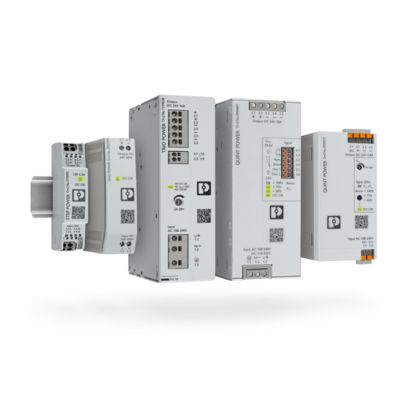
Phoenix Contact offers UNO POWER, TRIO POWER, and QUINT POWER families for different application needs. Selecting between them should be an engineering decision based on load behavior, system availability, diagnostics, fault clearing, and future serviceability.
The problem with nameplate-only selection
Voltage and continuous current are necessary checks, but they do not describe startup reserve, overload behavior, short-circuit response, monitoring, or how one failed field circuit affects the rest of the panel. A supply that is acceptable for a small steady load may be a poor fit for a pump station, process panel, or remote system where losing the 24 VDC bus creates downtime and confusing fault symptoms.
UNO POWER
Compact basic power for stable, predictable loads. UNO can fit small enclosures and dedicated auxiliary equipment where advanced monitoring or selective fault clearing is not required.
- Small instrumentation panels
- Remote monitoring enclosures
- Operator interfaces or communication devices
- Constant, noncritical DC loads
TRIO POWER
Standard industrial power for machine and system loads with more dynamic behavior. TRIO can be appropriate where reserve capability, diagnostics, and cost balance matter.
- Machine control panels
- Conveyor and solenoid systems
- Distributed I/O panels
- Moderate startup demand
QUINT POWER
Maximum-functionality power for critical applications where reserve, diagnostics, configurable behavior, and fault-clearing support can protect system availability.
- Municipal water and wastewater systems
- Lift and pump stations
- Remote unattended panels
- Processes where restarting is difficult
Why fault current matters
Consider a panel with separate DC branches for the PLC, remote I/O, operator interface, network switch, instrumentation, relays, solenoids, and field devices. If one field cable shorts, the preferred result is for the protective device on that branch to trip quickly while the unaffected control circuits remain powered.
A current-limiting supply may reduce output before a standard miniature circuit breaker receives enough current to trip magnetically. The faulted branch then drags down the whole 24 VDC bus while protection responds slowly or the control system resets first.
Selective Fuse Breaking is a system design tool
Phoenix Contact describes QUINT POWER supplies with SFB Technology as supporting selective tripping of standard miniature circuit breakers so parallel loads can continue operating. The actual result still depends on the exact supply, breaker curve and rating, conductor size, wire length, connection resistance, and available short-circuit current.
When QUINT is worth specifying
One fault should not stop everything
In a coordinated design, a QUINT supply can help provide the short-duration current needed to clear a faulted branch while preserving power to PLCs, communications, and unaffected loads.
Temporary load demand matters
Some industrial computers, HMIs, network equipment, capacitive devices, solenoid banks, radios, and I/O assemblies demand more current during startup than during normal operation. Power reserve can support these events without simply oversizing continuous capacity.
Monitoring provides earlier warnings
More advanced supplies can provide status and signaling that help identify output voltage, current, reserve, or overload concerns before the DC bus fails and the root cause becomes harder to separate from the shutdown.
Future changes are likely
Panels often gain instruments, radios, Ethernet switches, I/O modules, relays, and monitoring equipment over time. A supply with useful reserve and diagnostics gives the system a better foundation for those additions.
When TRIO or UNO may be the better choice
TRIO may fit
TRIO POWER can be the right balance when the application has dynamic loads but limited consequences from a complete shutdown, moderate boost capability is enough, extensive preventive monitoring is unnecessary, and panel cost is a major constraint.
UNO may fit
UNO POWER can be the correct selection when the load is small and predictable, little starting current is required, DIN rail space is tight, the supply serves a dedicated device, and branch-circuit selectivity is not required.
Good engineering does not mean using the most expensive supply in every enclosure. It means matching the operating behavior of the power supply to the risk, load profile, and service expectations of the control system.
Questions to ask before selecting
- What is the normal continuous load?
- What is the maximum expected load?
- Are connected devices highly capacitive?
- Do loads have significant startup or inrush current?
- How much future expansion is expected?
- What happens if the 24 VDC bus shuts down?
- Must one failed branch be isolated while other circuits continue operating?
- What type and size of branch protection will be used?
- Are wire lengths and conductor sizes compatible with selective tripping?
- Does the PLC need advance warning of an overloaded power system?
- Is redundancy required?
- How difficult or expensive would restart be?
How can BEA help?
Britton Electronics & Automation can help evaluate control-panel power calculations, Phoenix Contact UNO, TRIO, and QUINT selection, DC branch-circuit coordination, breaker or electronic protection selection, voltage drop, redundancy, PLC monitoring, modernization, and recurring 24 VDC failures.
The right supply is not selected only for the day everything works normally. It is selected for how the panel should behave when a field circuit fails, a load starts hard, or the system grows beyond its original assumptions.
For additional manufacturer context, see Phoenix Contact's overview of power supplies, SFB Technology, and QUINT POWER maximum-functionality supplies.