Fortress Safety | News & Insights
Why ISO 14119:2024 Calls Them Interlocks, Not Safety Switches
A machinery-safety perspective from Fortress Safety, summarized for BEA customers.
Vendor perspective
Interlocks are engineered safety controls
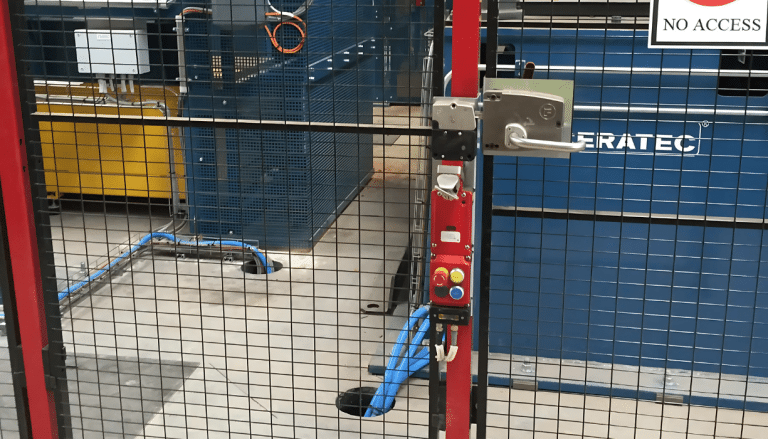
Fortress Safety describes an interlock as a mechanical, electrical, or other device that prevents hazardous machine functions from operating under specified conditions. Interlocked guards help bring hazards to a safe state before a person enters a safeguarded area.
The 2024 standard recognizes five interlock types
According to Fortress Safety's article, ISO 14119:2024 classifies interlocking devices by their operating and actuation principles. The notable addition is Type 5 for trapped-key interlocking devices, expanding the previous four-type classification.
Fortress notes that trapped-key systems can enforce an access sequence or control energy sources. Selection still begins with the machine's risk assessment and must account for the environment, required reliability, probability of failure, control-system integration, and measures that discourage defeat.
1. Assess the task and hazard
Identify how people interact with the machine and where motion or hazardous energy creates unacceptable risk.
2. Select the interlock type
Match the device and actuation principle to the application, required safety function, and operating environment.
3. Integrate and validate
Consider the complete safety-related control system, resistance to defeat, applicable standards, and application-specific validation.
Why the terminology matters
The phrase safety switch remains common in industry, but Fortress explains that it is broad and can be ambiguous: a switch is a component inside a device, while an interlocking device has defined safety functions, design requirements, and performance expectations.
Using the standards-based term helps engineers, machine builders, operators, and suppliers discuss the complete protective function more precisely.
Why listen to Fortress
Machinery-safety experience behind the article
Fortress Safety says it has specialized in machinery safety and interlocking since 1977 and participates in standards-development work involving BSI, ANSI, and ISO. The source article is written by Stefano Tommasone, PhD, Fortress Content Manager and a B11 Licensed Machinery Safety Specialist.
Read the full vendor article: Interlocks in Machinery Safety and the Role of ISO 14119.
Bring the application to BEA
Britton Electronics & Automation can help connect machine-safety requirements with practical control, electrical, and automation choices. Final device selection, required performance, and validation must be based on the specific machine and the standards and regulations that apply to it.