
Functional Safety as a Performance Strategy for Automotive Machines
Machine safety | Build protection into automotive automation from the start
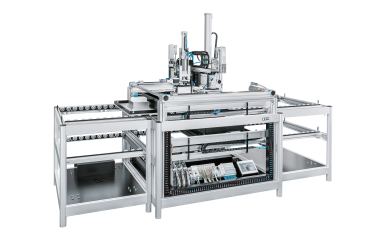
✓ Safety belongs in the machine concept
Festo's recent functional-safety article argues that automotive machine safety should not be added after the core design is complete. When safety is integrated early, engineers can address protection, machine availability, energy use, validation, and future changes as parts of one architecture.
That is especially relevant in automotive and e-mobility production, where high throughput, flexible layouts, controlled motion, valuable processes, and interaction between people and machines must coexist.
1. Assess the real application
Start by identifying where the actual process creates risk. A precise, application-specific assessment helps establish the required safety level and reduces guesswork later in the project.
2. Match functions to architecture
Define the needed safety functions around the machine's motion profile, layout, and operating modes. This helps balance protection, flexibility, and complexity without automatically overspecifying the system.
3. Implement for performance
Circuit design and component selection affect response time, diagnostics, restart behavior, fault handling, and output. Good implementation protects people while supporting reliable production.
✓ Put the safety function closer to the motion
Festo highlights a shift from exclusively centralized safety concepts toward functions located closer to the actuator. Depending on the application, this can enable faster, more precise responses, simplify modular machine sections, increase layout flexibility, and improve machine availability.
Electric and pneumatic safety functions can both contribute. The right combination depends on the risk assessment, required behavior, machine architecture, and applicable standards. Safety decisions must be validated for the complete application.
Modernize without rebuilding everything
Existing equipment may need to meet updated safety requirements or internal standards. Festo notes that scalable concepts can support targeted retrofits, such as modernizing selected safety functions, improving diagnostics, or aligning specific machine sections with current requirements while preserving useful equipment.
Read the primary source: Festo's functional safety article for automotive machines.
How BEA can help
Britton Electronics & Automation can help evaluate machine-safety needs alongside controls, electrical, pneumatic, and motion requirements, then support practical component selection and system integration.
Contact BEA when planning a new machine concept or a focused safety upgrade for existing automation.