
Yaskawa Motoman HC-Series Collaborative Robots
Yaskawa Motoman HC Series
Collaborative robot capacity for production work that still needs human flexibility.
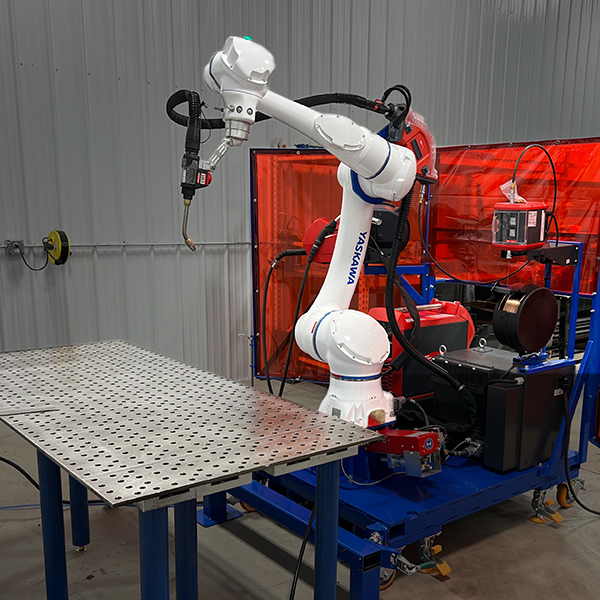
Yaskawa Motoman positions the HC-Series as human-collaborative six-axis robots for manufacturers that need flexible automation without giving up industrial robot capability. The family covers payloads from 10 kg to 30 kg and is aimed at work that changes often enough to make simple teaching, redeployment, and operator interaction important.
For BEA customers, the practical value is not just the robot arm. It is the complete application: guarding and risk assessment, end-of-arm tooling, controller selection, PLC integration, operator workflow, maintenance access, and support after startup.
What the HC-Series is built to solve
Collaborative robot projects usually start with a constraint: a repetitive task is hard to staff, the product mix changes, the workcell footprint is limited, or a fully fenced industrial robot cell is not the best fit for the operation. The HC-Series gives engineering and maintenance teams a robot platform that can be taught and adjusted more directly while still supporting production applications such as machine tending, assembly, welding, inspection, packaging, and palletizing.
HC10DTP
10 kg payload with 1200 mm horizontal reach and 2400 mm vertical reach, according to the Motoman HC-Series product page.
HC20DTP
20 kg payload with 1700 mm horizontal reach and 3400 mm vertical reach for larger collaborative handling tasks.
HC30PL
30 kg payload with 1700 mm horizontal reach and 3400 mm vertical reach, positioned for heavier palletizing-style work.

Why it matters operationally
- Power and Force Limiting: Yaskawa describes PFL technology as part of the collaborative safety approach, with the final application still requiring a proper safety and risk assessment.
- High-mix setup: hand-guided teaching and Smart Pendant compatibility can reduce the friction of teaching, changeover, and operator adjustment.
- Integration path: the HC-Series can be paired with YRC1000 or YRC1000micro controllers, EOAT, fixtures, software, and optional MLX300 software for PLC integration.
- Application range: the source page highlights machine tending, quality inspection, arc welding, assembly, palletizing, bag palletizing, electronics assembly, part loading, case packing, drilling, pick-and-pack, and compact workcells.
Collaborative does not mean design-free
A collaborative robot can reduce guarding and access constraints in the right application, but it does not remove the need for engineering review. Payload, reach, tooling, part shape, pinch points, cycle speed, operator position, stopping behavior, and the surrounding equipment all affect whether the final system is appropriate for human-adjacent operation.
Where BEA can apply and support it
BEA can help evaluate whether an HC-Series robot is the right fit for a production task and whether the surrounding controls, tooling, sensing, and operator process are ready for automation. Good candidates often include repetitive load/unload tasks, packaging steps, fixture-based assembly, inspection presentation, welding path teaching, and palletizing or case-handling tasks where the robot selection must be matched to payload, reach, cycle time, and safety behavior.
BEA support can include application scoping, robot and controller selection, PLC and HMI coordination, EOAT review, safety-device integration, commissioning support, troubleshooting, and lifecycle service planning.
Source: Yaskawa Motoman HC-Series collaborative robots. Final model selection should be checked against the current Yaskawa documentation and the actual application risk assessment.
Rockwell Automation Compact 5000 High-Density I/O Modules
Vendor Spotlight
Rockwell Automation expands Compact 5000 digital I/O density
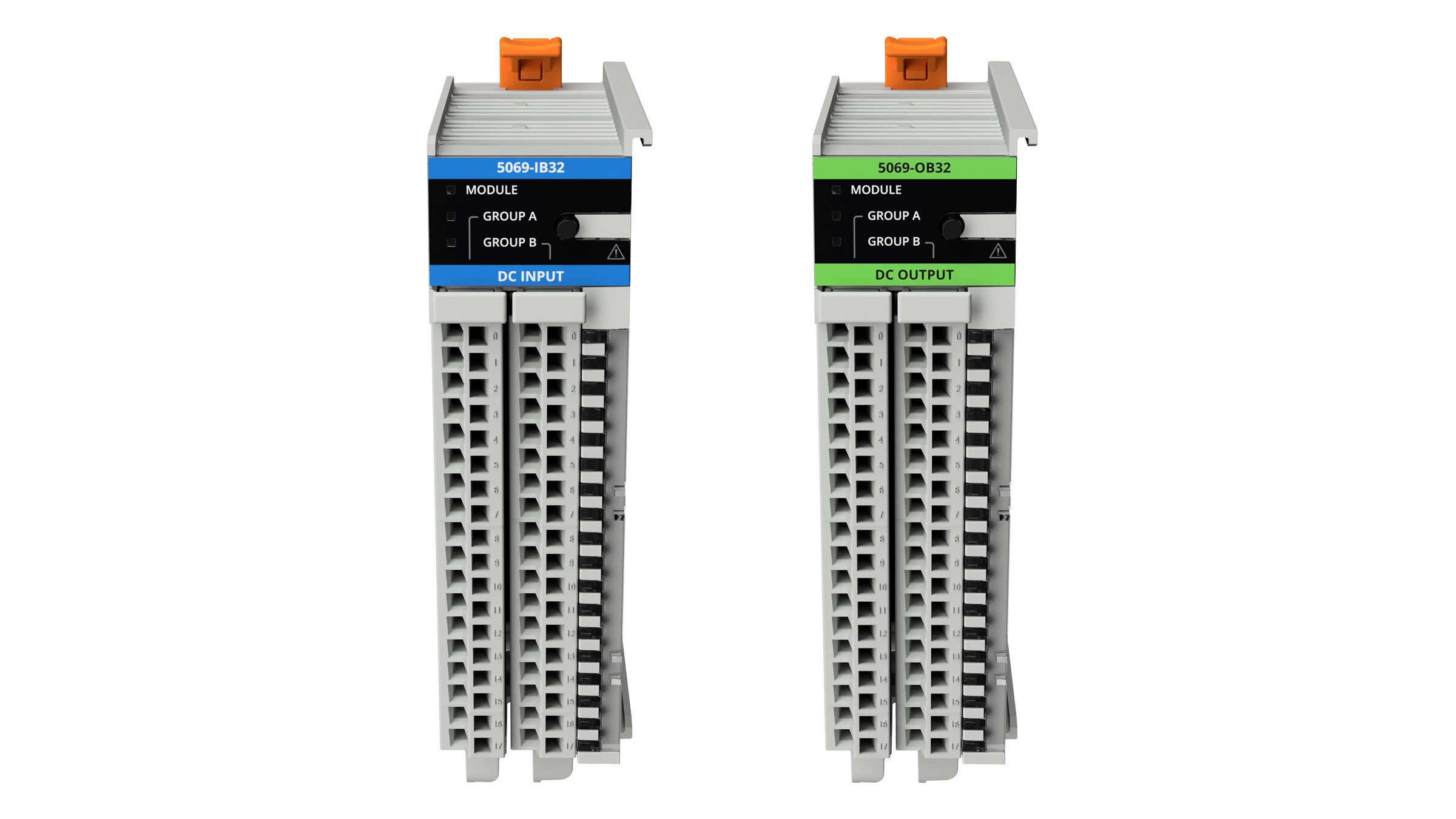
Rockwell Automation's Allen-Bradley Compact 5000 high-density modules, 5069-IB32 and 5069-OB32, give machine builders and plant teams a 32-channel digital I/O option for Compact 5000 architectures. For BEA customers already invested in Rockwell Automation controls, these modules are worth evaluating when panel space, migration planning, and Logix platform consistency are driving the design.
CompactLogix and GuardLogix I/O density without a full architecture shift
The 5069-IB32 input module and 5069-OB32 output module extend the Compact 5000 portfolio with 32-channel digital I/O. Rockwell Automation positions the modules as a practical path for customers moving from the 1769 architecture while staying aligned with the Logix platform.
The value is straightforward: more I/O density, less panel footprint, and a familiar Rockwell Automation integration path for CompactLogix 5380 and GuardLogix 5580 systems.
Vendor platform
Rockwell Automation lists the modules as part of the Allen-Bradley Compact 5000 family, giving teams a high-density option inside a familiar controls ecosystem.
I/O capacity
The product spotlight identifies the 5069-IB32 and 5069-OB32 as 32-channel modules, covering high-density digital input and digital output use cases.
Panel space
Rockwell Automation states the compact form factors increase space efficiency and reduce footprint by almost 40 percent compared with previous modules.
Commissioning reference
The tactile press switch function lets users select control group A or B status indicators, giving technicians a clearer reference point during commissioning.
Where BEA would evaluate fit
For a migration or panel update, BEA would review controller platform, I/O count, wiring method, available enclosure space, and service expectations before recommending these modules. The high-density format can help, but the application still needs to be checked against current Rockwell Automation technical documentation.
How BEA can help
BEA can help compare these Rockwell Automation modules against the existing I/O architecture, panel footprint, migration goals, wiring approach, and controller platform. We can also help confirm whether the 5069-IB32 or 5069-OB32 is appropriate before parts are specified or a retrofit is scheduled.
Allen-Bradley PowerFlex 755TS Low Voltage VFD
Featured Drive Platform
PowerFlex 755TS Brings Smarter VFD Capability to Demanding Motor-Control Work
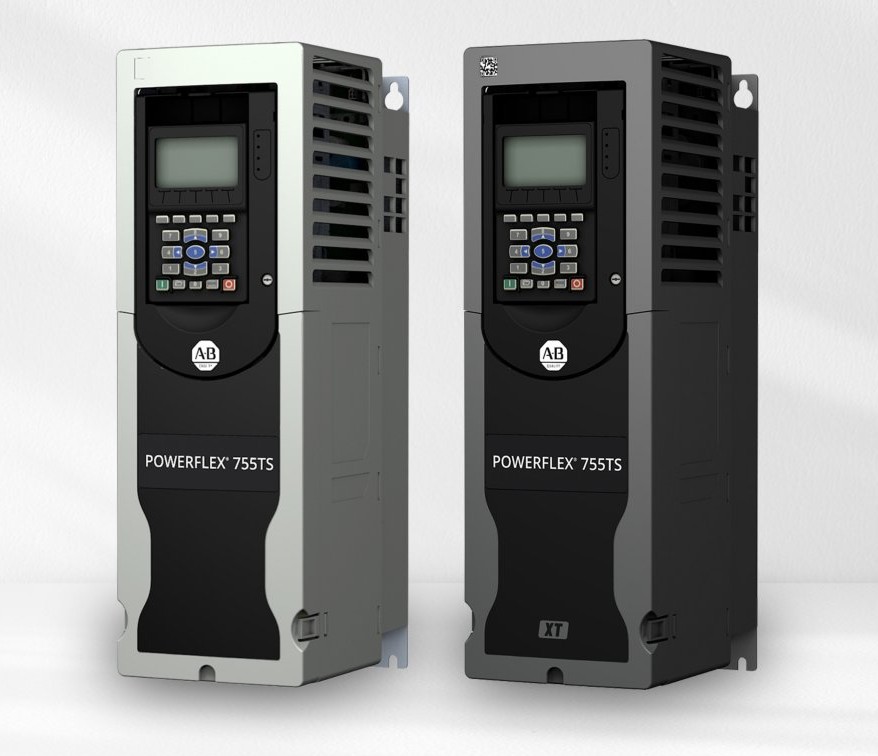
The Allen-Bradley PowerFlex 755TS is a low-voltage variable frequency drive designed for industrial applications where uptime, diagnostics, and drive integration matter as much as speed control. Rockwell Automation describes the platform as a six-pulse VFD using TotalFORCE technology to provide flexible motor control, real-time operational intelligence, and commissioning support.
Why It Matters Operationally
For plants standardizing on Rockwell Automation controls, the PowerFlex 755TS gives engineering and maintenance teams a current PowerFlex option with support for multiple motor types and control modes. This can simplify spare-parts strategy, employee training, and lifecycle support across pumps, fans, conveyors, process equipment, and higher-performance motor applications.
Application Fit
Rockwell Automation lists the PowerFlex 755TS for applications ranging from standard VFD duty to more demanding industrial-control challenges. Published capabilities include predictive analytics, adaptive control features, Studio 5000 integration, built-in dual-port Gigabit EtherNet/IP, CIP Security support, safety options, and XT corrosive-gas protection for harsh environments.
Selection Considerations
Drive selection should be checked against the actual motor, enclosure, environment, network, safety, and service requirements. Rockwell Automation lists ratings from 1 to 500 hp, or 0.75 to 355 kW. The published operating-temperature range is -20°C to 60°C with derating, with no derating required through 50°C. Available configurations include IP00/IP20 open, flange mount, IP54 Type 12, and XT corrosion-protection options.
How BEA Can Help
BEA can help determine whether the PowerFlex 755TS is the right fit for a new installation, modernization project, or migration from an older PowerFlex platform. Our team can assist with drive selection, controls-integration planning, panel and environmental considerations, network integration, and coordination around Rockwell Automation documentation before implementation.
Anchor Scientific Eco-Float Mercury-Free Float Switch
Anchor Scientific Liquid Level Control
Eco-Float Mercury-Free Float Switch
A rugged, versatile approach to liquid-level switching without a mercury element.
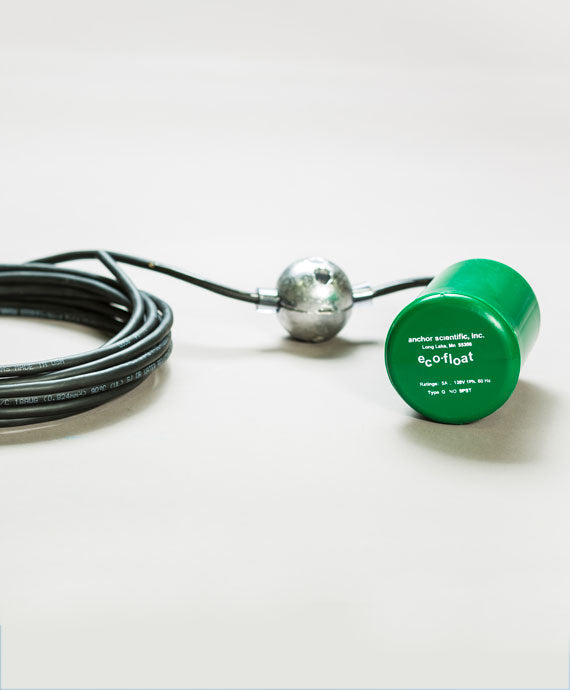
The Anchor Scientific Eco-Float uses a steel ball moving inside a switching tube to actuate a snap-action switch within a plastic float housing. The design provides a minimum on-to-off differential of approximately 3.5 inches.
Pipe-mounted and externally weighted styles can provide greater differentials, while available cable lengths and circuit configurations help match the switch to a range of control applications.
Built for demanding level-monitoring applications
Corrosion-resistant construction supports use in a variety of liquids. Typical applications include lift stations, sumps, sewage ejectors, septic tanks, vaults, and tanks.
A steel ball activates a dependable snap-action switch.
Choose suspended external-weight, suspended internal-weight, or pipe-mounted styles.
Multiple cable lengths and circuit configurations support varied control needs.
Configure the float for the control strategy
Select the mounting style, cable length, and normally open, normally closed, or changeover circuit arrangement appropriate for the panel and operating sequence. Confirm electrical ratings, liquid compatibility, installation requirements, and applicable electrical codes before selection.
How BEA can help: Britton Electronics & Automation can help identify the appropriate Eco-Float configuration and complementary level-control components for new systems, replacements, and upgrades.
Turck D-Coded M12 Field-Wireable Connectors with Push-In Termination
Turck Industrial Connectivity
D-Coded M12 Field-Wireable Connectors
with Push-In Termination
Terminate industrial Ethernet cable directly in the field with a rugged connector designed for faster, simpler installation.
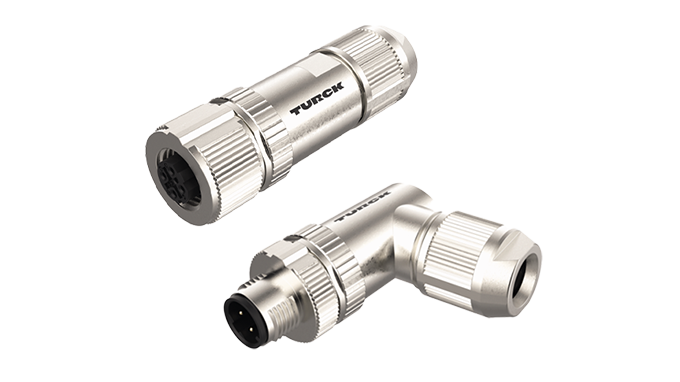
Turck's shielded D-coded M12 field-wireable connector provides an on-site alternative when a factory-molded cable is not the right fit. Push-in termination helps installers connect network cable quickly while maintaining a secure industrial connection.
The four-pin connector supports Cat5e performance and is available in male and female versions with straight and right-angle orientations, giving machine builders and maintenance teams practical options for different routing and space requirements.
Designed for the factory floor
Rugged construction and shielding support reliable industrial Ethernet connections where cables must be cut to length or terminated at the installation point. The field-wireable format can simplify machine modifications, commissioning, and cable replacement when premolded assemblies are impractical.
Shielded four-pin design for industrial Ethernet connectivity.
Reliable data transmission for compatible network installations.
Fast, straightforward field assembly without a molded cable end.
Match the connector to the installation
Select the male or female and straight or right-angle configuration that fits the device interface, cable routing, enclosure clearance, and service access. Confirm cable construction, conductor compatibility, shielding, network requirements, and environmental conditions for the complete application.
How BEA can help: Britton Electronics & Automation can help identify the appropriate Turck connector configuration, cable, and complementary industrial networking components for new machines, retrofits, and field repairs.